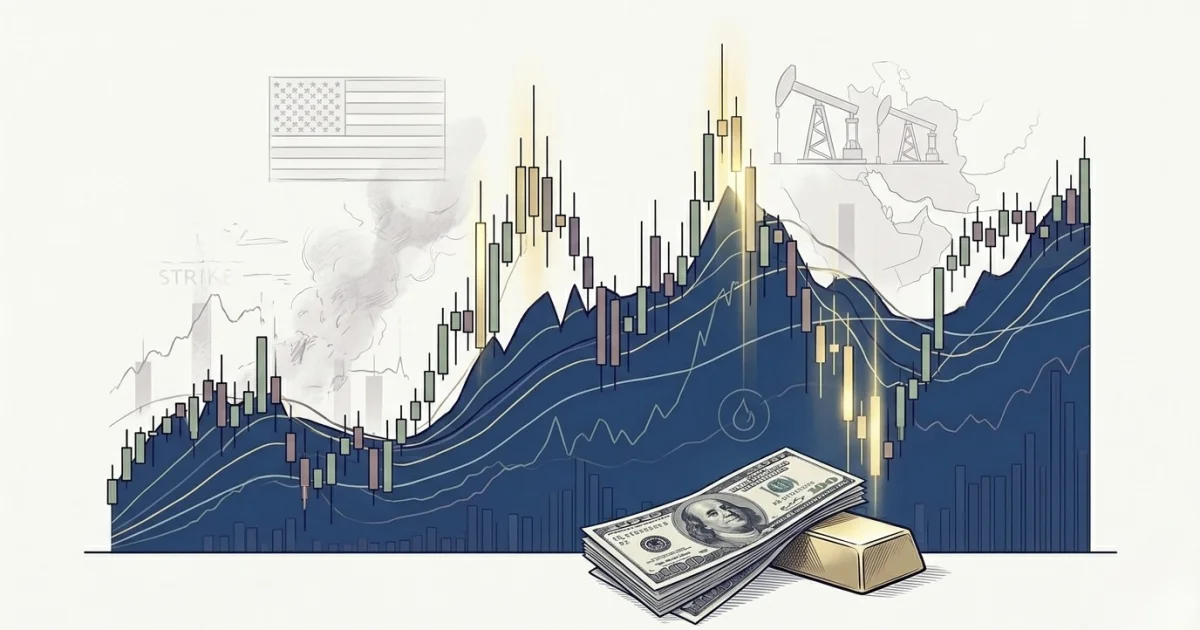
Daily Market Wrap: Iran Deadline, Israel Strike and Soft US ISM Keep Markets Nervous
Markets closed the day in a cautious and uneasy mood as traders navigated a combination of rising geopolitical tension and softer U.S. economic data. The dominant theme was clear: headline risk remained in control. Developments around Iran, Israel, and the U.S. added fresh uncertainty to the outlook, while a weaker U.S. services reading complicated the macro picture further.
The biggest political headline came from President Donald Trump, who said Tuesday’s Iran deadline is the “final deadline.” That comment sharpened the market’s focus on the next 24 hours, because it signaled that Washington is treating the current diplomatic window as limited. In practical terms, that kept traders reluctant to take large directional bets while the risk of further escalation remains on the table.
Iran then added to market caution by rejecting a temporary ceasefire proposal that was conveyed through Pakistan. Instead of accepting a short-term pause, Tehran said it wants a permanent end to the war. That reduced hopes for a quick de-escalation and reinforced the sense that the situation remains fluid, fragile, and highly sensitive to incoming headlines.
Tensions rose another step after Israel said it had carried out a powerful strike on Iran’s largest petrochemical complex in South Pars. That matters well beyond the geopolitical dimension. South Pars is a critical part of Iran’s energy system and petrochemical output, so any attack there naturally raises concerns about broader supply disruption, energy-market volatility, and inflation-sensitive price action across global assets.
On the economic side, the U.S. ISM services index came in at 54.0 for March, below the 54.9 expected and down from 56.1 in February. The reading still points to expansion, but it also shows that momentum in the services sector cooled. At the same time, the prices-paid component rose to 70.7, its highest level since October 2022, showing that inflation pressure remains an issue even as growth signals soften.
That combination made today’s session especially difficult to read from a pure macro perspective. Normally, weaker services data might have encouraged a cleaner reaction against the dollar. But geopolitical stress, oil sensitivity, and uncertainty around the Iran situation kept sentiment defensive and stopped markets from settling into a simple risk-on or risk-off pattern. That market interpretation is an inference from the day’s reported developments and price-sensitive headlines.
What mattered most today
The key takeaway from today’s session is that markets are still being driven first by conflict risk and only second by routine economic releases. The ISM miss was important, but it did not fully dominate the session because traders were far more focused on whether the Iran deadline produces a diplomatic breakthrough, another round of escalation, or more confusion. As long as that uncertainty remains unresolved, headline-driven volatility is likely to stay elevated.
BonusPips trader takeaway
For traders, this was a reminder that market direction can change quickly when geopolitics collides with macro data. Softer U.S. numbers alone may have pointed one way, but war-related developments and energy-risk concerns pulled attention elsewhere. In this kind of environment, discipline matters more than prediction. Markets are still trading the headlines, and until there is more clarity around Iran, volatility and uncertainty are likely to remain part of the landscape.



0 Comments